Best Citizenship by Investment for Nigerian Citizens
Updated
Discover the best citizenship by investment options for Nigerians in 2024, comparing Grenada, Antigua, Malta, and Turkey for mobility, cost, and family security.
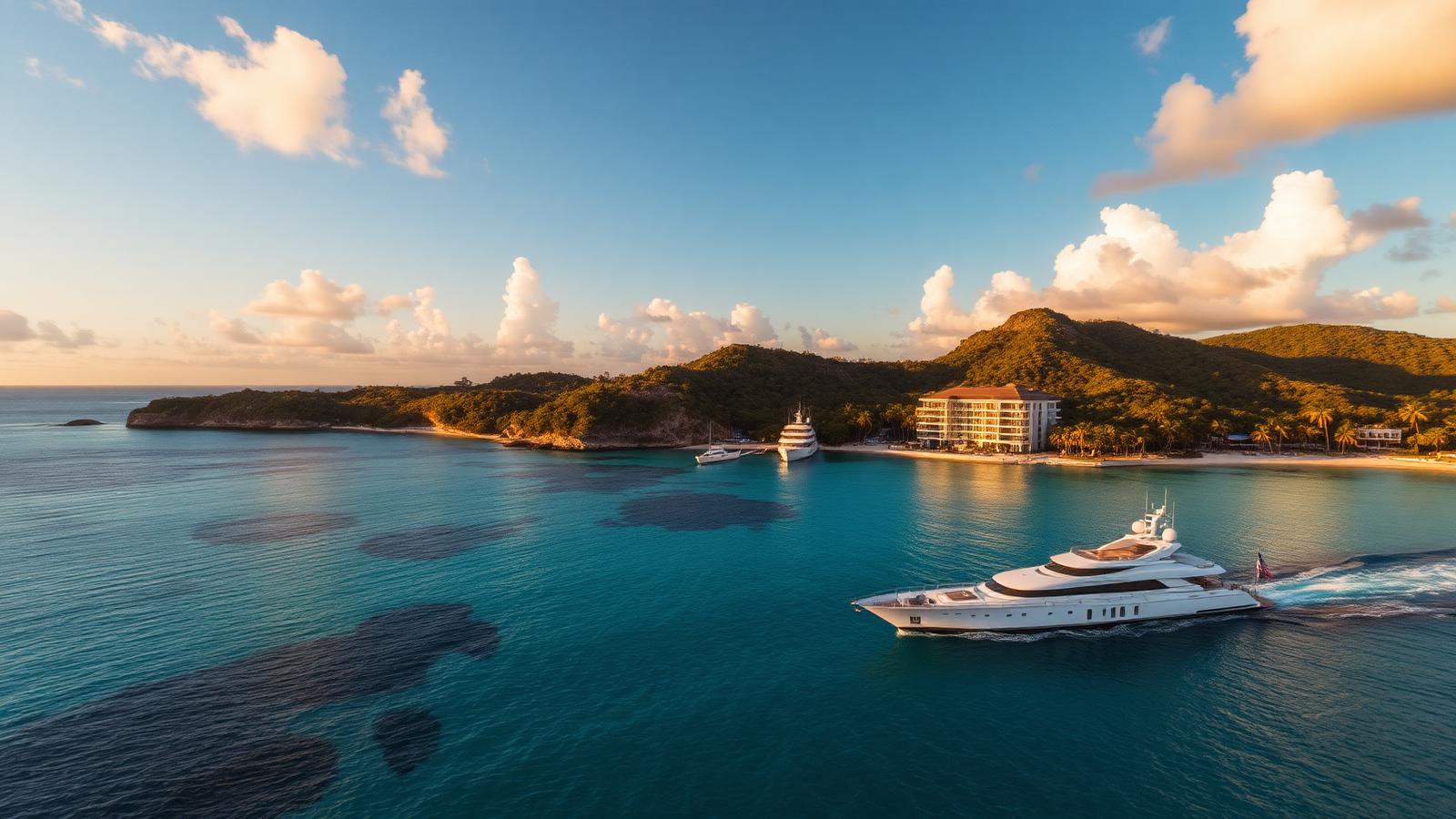
For Nigerian applicants, Caribbean citizenship by investment programmes can expand travel options, with eligibility and family rules varying by country. Malta closed its investment citizenship scheme to new applicants in 2025.
What is the Best Citizenship by Investment for Nigerian Citizens?
Malta closed its investment-based citizenship scheme to new applicants in 2025 after the EU court ruling; see the Malta citizenship closure guide.
Key Takeaways
- Global Mobility: Caribbean programmes significantly enhance the Nigerian passport, which currently allows visa free travel to fewer than 50 countries.
- Financial Entry Point: Minimum investments now start at $200,000 for Caribbean options following the 2024 price harmonisation.
- US Access: Grenada is the only Caribbean CBI nation with an E-2 Investor Visa treaty with the United States.
- Processing Times: Most programmes require 6 to 12 months for completion, though Malta takes at least 12 to 36 months.
- Family Security: Most options allow for the inclusion of spouses, children, and elderly parents under a single application.
Why are Nigerian HNWIs seeking second citizenships?
Nigeria remains Africa's largest economy, yet the Nigerian passport often presents significant hurdles for international business and travel. For a High-Net-Worth Individual (HNWI) based in Lagos or Abuja, the ability to travel at short notice to the UK, Schengen Area, or Southeast Asia is often a business necessity that the current green passport cannot facilitate. Citizenship by Investment (CBI) programmes provide a legal, structured, and permanent solution to these mobility constraints.
Beyond travel, the primary drivers for Nigerians include currency diversification, access to international education for children, and a 'Plan B' against local socio-economic volatility. By securing a second passport, Nigerian families can hold assets in more stable currencies and access global banking systems that are often restricted for those with a single Nigerian nationality.
Which Caribbean programmes are best for Nigerians in 2024?
As of mid-2024, the landscape of Caribbean CBI has changed significantly. Following a Memorandum of Understanding (MoU) between the five Caribbean nations (Antigua and Barbuda, Dominica, Grenada, St Kitts and Nevis, and St Lucia), the minimum investment threshold was raised to $200,000 to improve programme integrity and satisfy international regulators.
Is Grenada still the top choice for US access?
Grenada holds a unique position for Nigerian investors. It is the only CBI country in the Caribbean that holds an E-2 Investor Visa treaty with the United States. This allows Grenadian citizens to invest a substantial amount in a US business and reside in the US to manage it. For Nigerian families looking for a bridge to North America without the multi-year wait times and high capital requirements of the EB-5 programme, Grenada is the premier choice.
Furthermore, the Grenadian passport allows visa free travel to China, a rare benefit that appeals to Nigerian entrepreneurs involved in global trade and manufacturing.
Why consider Antigua and Barbuda for large families?
For a Nigerian family of six or more, Antigua and Barbuda frequently offers the most cost-effective route. The University of the West Indies (UWI) fund option is specifically designed for large families, allowing a family of six to gain citizenship for a flat contribution of $300,000, inclusive of processing fees. This makes it significantly more affordable than other jurisdictions where per-dependent fees can escalate quickly.
Comparison of CBI Programmes for Nigerians
| Country | Minimum Investment | Global Access (Countries) | Notable Benefit |
|---|---|---|---|
| Grenada | $235,000 | 140+ | US E-2 Visa & China access |
| Antigua & Barbuda | $230,000 | 150+ (readers should verify as visa agreements can change) | Best for families of 6+ |
| St Kitts & Nevis | $250,000 | 150+ | Longest running, prestigious |
| St Lucia | $240,000 | 140+ (readers should verify as visa agreements can change) | Real estate & bond options |
| Malta (historical MEIN, closed in 2025) | Formerly €600,000+ | No new applications | Existing citizens retain EU rights |
| Turkey | $400,000 | 110+ | Real estate ownership in a major hub |
Note: Costs include minimum donation/investment capital only. Legal, due diligence, and government fees are additional.
Is the European dream still possible through investment?
Malta was once a European investment citizenship option but MEIN closed to new applicants in 2025. It should not be compared with currently open programmes. See the Malta citizenship closure guide.
Malta closed its investment-based citizenship scheme to new applicants in 2025 after the EU court ruling; see the Malta citizenship closure guide.
For the wider context, read our full citizenship by investment 2026: every programme, cost & timeline compared.
How does the Turkey CBI programme benefit Nigerians?
Turkey offers a geographically strategic option. By investing $400,000 in Turkish real estate, Nigerians can obtain citizenship for their spouse and children under 18. Unlike Caribbean options, the Turkish programme is heavily focused on property ownership in a booming metropolitan market like Istanbul.
For Nigerians, Turkey provides a cultural and religious bridge between the Middle East and Europe. The processing time is relatively fast, often between 6 to 9 months, and there is no requirement for physical residency. It also serves as another route to the US via the E-2 visa, though the treaty status of Turkey is frequently under review so current advice from an immigration lawyer is essential.
What are the specific challenges for Nigerian applicants?
Due diligence is the most critical stage for any Nigerian applying for a second citizenship. International units often scrutinise Nigerian files more closely due to the country’s high-risk classification by certain global financial watchdogs. To ensure success, applicants must provide:
- Proof of Funds: Comprehensive documentation showing the legal source of wealth, which may include corporate bank statements, tax returns, and deeds of sale for property.
- Clean Criminal Record: Police clearance certificates from Nigeria and any other country where the applicant has lived for more than six months in the last 10 years.
- Sanctions Screening: Ensuring no association with PEPs (Politically Exposed Persons) who are under international sanctions.
Working with an authorised agent is mandatory; most Caribbean and European programmes do not allow direct applications.
Frequently Asked Questions
Can I keep my Nigerian passport? Yes, Nigeria allows dual citizenship. You do not have to renounce your Nigerian nationality when you acquire a second passport through investment, provided you follow the legal procedures in both jurisdictions.
Do I need to visit the country to get the citizenship? All applicants for the five Caribbean programmes must now complete a mandatory interview. While most do not require you to live there, Antigua and Barbuda has a 5-day physical stay requirement in the first five years. A 30-day stay requirement is also planned for all five countries.
Can my children attend school in the UK with these passports? While some Caribbean passports provide visa-free entry for short visits to the UK, they do not automatically grant the right to study or work. However, having a second citizenship often simplifies the student visa application process and provides an alternative 'home' base.
What is the fastest programme for Nigerians? St Lucia and Antigua typically offer some of the most efficient processing times, often concluding within 6 to 8 months. St Kitts and Nevis previously offered an accelerated process, but this is currently inconsistent following recent legislative changes.
Is the investment refundable? Donations to government funds (the most common route) are non-refundable. Investments in real estate are generally refundable after a mandatory holding period (usually 5 to 7 years), though you must consider market fluctuations and transaction taxes.
What happens if my application is rejected? If an application is rejected on the grounds of due diligence, the investment capital is typically returned, but the due diligence and processing fees are lost. It is vital to conduct a pre-screening with your advisor before submitting a formal application.
Disclaimer: This article is for informational purposes only and does not constitute legal, financial, or tax advice. Readers should consult with a qualified professional advisor regarding their specific circumstances and the latest programme regulations.
Further official references
Beyond the sources cited in this article, the official government and intergovernmental bodies below publish the primary rules and fees for this area. Always consult them for current figures.
- Malta — Community Malta Agency (MEIN)
- St Kitts & Nevis — Citizenship by Investment Unit
- Grenada — Citizenship by Investment Committee
- Antigua & Barbuda — Citizenship by Investment Unit
- Dominica — Citizenship by Investment Unit
- Saint Lucia — CIP Unit
- Türkiye — Presidency of Strategy and Budget / Land Registry
This page was last reviewed on . Where official figures have changed since publication, the primary source prevails.
See our full editorial disclaimer.
Get matched with the right advisor
Tell us what you're considering. We'll introduce you to the most relevant partner firm at no cost.