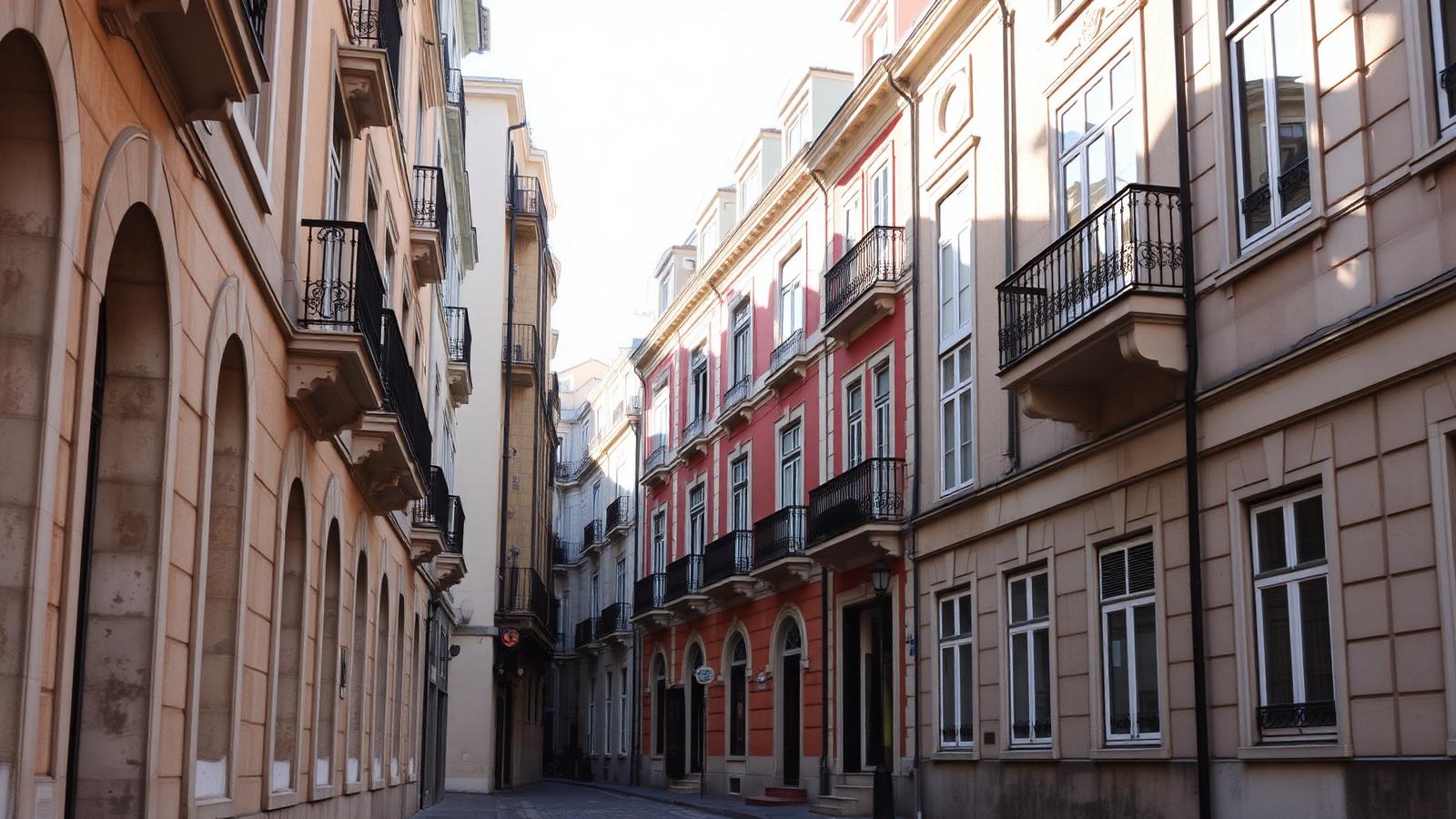
Buying Property in Malta as a Foreigner
Updated
A guide to buying property in Malta as a foreigner, covering nationality-based permit requirements, Special Designated Areas, stamp duty and transaction costs, alongside the distinction between ownership and residence rights.

Foreigners can buy property in Malta, but nationality, residence history and location determine whether an Acquisition of Immovable Property permit is required. Qualifying Special Designated Areas are exempt from ordinary AIP restrictions. Standard buyer’s stamp duty is 5%, and an AIP permit costs €233 where required. Ownership alone confers neither residence nor citizenship.
In short
Foreigners can buy property in Malta, but nationality, residence history and the property’s location determine whether a permit is needed. Standard buyer’s stamp duty is 5%, including a 1% provisional payment; an Acquisition of Immovable Property permit costs €233 where required. Buying does not itself confer residence, citizenship or unrestricted letting rights.
Can foreigners buy property in Malta, and who needs a permit?
Foreigners can buy Maltese property, but some buyers must obtain an Acquisition of Immovable Property (AIP) permit before completing a purchase outside a Special Designated Area.
The distinction is between permission to acquire property and permission to live in Malta. These are separate legal questions, administered through different procedures. A valid purchase does not settle the buyer’s immigration position.
The principal ownership rules come from Malta’s Immovable Property (Acquisition by Non-Residents) Act, Chapter 246, and the Malta Tax and Customs Administration’s AIP guidance.
For an individual buyer, the starting position is:
| Buyer or household | Position outside a Special Designated Area | Position within a Special Designated Area | Dependants and residence implications |
|---|---|---|---|
| EU citizen who has resided continuously in Malta for at least five years | Generally does not require an AIP permit | No AIP permit required | Ownership does not automatically establish a spouse’s or child’s immigration entitlement |
| EU citizen without five years’ continuous residence, buying a primary residence | Generally exempt from the AIP requirement for that primary residence | No AIP permit required | Family residence rights must be assessed separately |
| EU citizen without five years’ continuous residence, buying a secondary residence | Generally requires an AIP permit | No AIP permit required | Adding family members does not remove the permit requirement |
| Non-EU citizen buying personally | Generally requires an AIP permit, subject to any applicable exemption | No AIP permit required | The buyer still needs an appropriate basis to reside in Malta |
| Couple buying jointly with different nationalities or residence histories | Each purchaser’s position needs examination; one purchaser’s exemption should not be assumed to cover the other | AIP restrictions are disapplied within qualifying designated areas | Marriage alone should not be treated as evidence of an exemption |
| Parents buying with, or for, children | The identity and legal capacity of every purchaser matter | Designated-area treatment does not remove ordinary conveyancing requirements | A child is not automatically included as an owner or residence beneficiary |
British citizens should normally begin with the non-EU analysis. Anyone relying on rights protected by the EU–UK Withdrawal Agreement should have their particular position checked rather than assuming that British nationality carries the same treatment as EU citizenship.
An AIP permit is generally a route to acquiring a home for the purchaser’s and family’s use, not a general investment-property licence. Restrictions on additional acquisitions and letting make this distinction commercially important.
What is a Special Designated Area? It is an area formally designated under Maltese law where the ordinary AIP acquisition restrictions do not apply. The designation attaches to the legally defined development or area, not to an estate agent’s description of a neighbourhood.
Ask the notary to verify that the actual unit falls within the designation. Being near a qualifying development is insufficient.
How much does buying property in Malta cost?
A buyer should ordinarily budget for 5% stamp duty, professional and registration costs, and an AIP permit fee where applicable, in addition to the purchase price.
The standard stamp-duty calculation is generally based on the higher of the consideration and the property’s market value, rather than whatever allocation the parties prefer. Under-declaring the price is not a legitimate way to reduce the bill.
Malta’s Tax and Customs Administration publishes the relevant property-tax and AIP guidance. The governing duty legislation is the Duty on Documents and Transfers Act, Chapter 364.
The following table separates government charges from private transaction costs. “Family of four” assumes the same property and ownership structure: property acquisition is not ordinarily priced per family member.
| Cost or fee line | Single buyer | Family of four buying the same property | Treatment and qualification |
|---|---|---|---|
| Final buyer’s stamp duty | Standard rate: 5% of the applicable dutiable value | Same property-based calculation | Reliefs or exemptions may alter the result; eligibility must be verified |
| Provisional duty on the promise of sale | 1% of the declared transfer value | Same property-based calculation | Credited against final duty; not an additional 1% charge |
| Duty balance at completion | Normally the standard liability less provisional duty already paid | Same calculation | Often described as the remaining 4%, but valuation differences or reliefs can change it |
| AIP permit fee, if required | €233 | No general per-dependant surcharge; confirm the application structure for joint purchasers | Government permit charge; do not assume every family member needs a separate permit |
| Public Registry and Land Registry charges | Transaction-specific | Transaction-specific | Ask for an itemised calculation under the applicable official schedules |
| Official searches, certificates and copies | Depends on the documents required | Depends on title and purchasers, not simply household size | These may appear as disbursements in the notary’s account |
| VAT on taxable professional services | Standard VAT rate: 18%, where applicable | Same rate where applicable | Applies to taxable services, not as an automatic 18% addition to the home’s price |
| Notarial fees | Obtain a written calculation under the applicable tariff | Depends on the transaction | A professional charge, not a flat government “foreign buyer fee” |
| Independent legal and architectural advice | Written quotation required | Written quotation required | Scope-dependent professional costs |
| Mortgage-related registration and official charges | Applicable only where relevant | Applicable only where relevant | Depend on the security and financing structure |
| Bank valuation, arrangement costs and insurance | Lender-specific | Lender-specific | Commercial charges, not universal government fees |
| Estate-agency charges, if payable by the buyer | Contract-specific | Contract-specific | Establish who pays and whether VAT is additional before signing |
The standard VAT rate is published by the Malta Tax and Customs Administration. A notary’s quotation should distinguish their own remuneration, taxable services and money collected for government payments.
Worked example: on a €500,000 purchase, assuming the same dutiable value, the standard 5% duty is €25,000. A €5,000 provisional payment leaves €20,000 payable towards duty at completion. Where one €233 AIP permit fee applies, those duty and permit charges total €25,233, before professional fees and disbursements.
These figures are arithmetic illustrations, not a complete conveyancing quotation.
A purchase deposit is different again. It forms part of the price and is not an extra government charge. Its amount, who holds it and when it can be released should be expressly agreed.
There is no reliable universal “all-in percentage” covering every purchase. Historic title, financing, co-ownership and property condition affect the work required. Likewise, first-time-buyer or restoration-related reliefs should not be assumed to apply merely because the buyer has never owned a Maltese home.
Request a dated, itemised completion statement, with each relief identified by its current legal basis. Do not build affordability around an expired concession.
What is the minimum property price, and can foreigners rent out their purchase?
There is no single minimum purchase price applying to every foreign buyer; minimum-value conditions matter particularly where an AIP permit or a separate residence programme is involved.
The AIP framework distinguishes apartments and maisonettes from other residential property. Its minimum acquisition values are periodically adjusted. The applicable threshold must therefore be confirmed with the Malta Tax and Customs Administration’s AIP unit for the intended application.
A precise but outdated threshold can be more damaging than no threshold at all: a purchaser may sign for a home that does not qualify. Have the notary confirm both the property’s classification and the current minimum before the promise of sale becomes binding.
These AIP values are separate from any qualifying-property requirement under a residence programme. A home can satisfy one framework without satisfying the other.
Can an AIP property be let? A property acquired under the ordinary AIP permit conditions is generally for the purchaser’s and family’s residential use and cannot be rented out. Do not base the investment case on holiday letting or long-term rental income without written confirmation that the proposed acquisition and use are permitted.
Purchasing in a Special Designated Area removes the ordinary AIP restriction, but does not remove other obligations. Short-let accommodation may require licensing through the Malta Tourism Authority; private residential letting may engage registration requirements administered by the Housing Authority.
Before underwriting rental income, establish:
- Whether the acquisition route permits letting.
- Whether the planning status permits the intended use.
- Whether the building’s rules restrict short lets or other activities.
- Which licence or tenancy registration is required.
- How rental income will be taxed.
An advertised yield is not evidence that these conditions have been met. Nor does unrestricted acquisition within a designated area mean unrestricted development, subdivision or commercial use.
How do you buy property in Malta, and how long does it take?
A Maltese purchase normally moves from an agreed offer to a promise of sale, legal and technical checks, any required approvals, and a final public deed; the overall timetable depends on those conditions.
There is no government-guaranteed completion period covering every transaction. Mortgage approval, title problems, planning irregularities and permit requirements can all extend it.
Agree the conditions before committing
The promise of sale, commonly called the konvenju, is a substantive agreement, not merely a reservation form. It sets the price, completion deadline, deposit arrangements and conditions.
A buyer should obtain advice before signing, with appropriate provisions addressing:
- Satisfactory title and searches.
- AIP approval, where required.
- Mortgage approval, if the purchase depends on borrowing.
- Planning and structural findings.
- Vacant possession or the agreed treatment of any existing tenancy.
- Furniture, fixtures, common areas and parking included in the sale.
A condition that is absent or poorly drafted may not protect the buyer simply because it was discussed during negotiations.
Register the promise of sale and pay provisional duty
Official tax guidance requires notification of the promise of sale and payment of provisional duty within 21 days. The notary normally handles the submission.
The buyer should nevertheless obtain confirmation that it has been done and retain the payment evidence.
Complete legal and technical due diligence
The notary investigates title and the legal position. An independent architect should examine the physical property and relevant planning documentation through the Planning Authority.
Check whether approved plans match the building as it exists, including terraces, enclosed balconies, internal alterations and roof structures.
Particular attention should also be paid to ground rent, access, common parts and airspace. Ownership of a top-floor apartment does not, by itself, answer who owns the roof or what can be built above it.
Obtain approvals and complete the deed
The AIP authority publishes a processing target of 35 days for a complete application. This is not a promise that the entire purchase will finish within 35 days, and the current administrative timetable should be reconfirmed before setting contractual deadlines.
At completion, the final deed records the transfer, the balance of the price is settled and the remaining duty is paid. The notary then handles the required registrations.
For planning purposes, agree a transaction-specific timetable rather than accepting an unsupported claim that all Maltese purchases complete within a fixed number of months.
Does buying property in Malta give you residency or citizenship?
Buying property in Malta does not automatically give a foreign purchaser residence rights, citizenship or permission to remain beyond their existing immigration entitlement.
This is especially important for buyers who intend to use the property throughout the year.
For many non-EU visitors, the Schengen short-stay framework permits up to 90 days in any 180-day period, subject to nationality, visa requirements and the person’s status. Owning a Maltese home does not reset that allowance, and it generally covers the Schengen area collectively, not Malta alone. The European Commission’s migration and home affairs guidance explains the calculation.
EU citizens benefit from free-movement rules, but residence beyond three months is subject to the applicable conditions and Maltese registration procedures. Property ownership is not a substitute for meeting them. Consult Identità for the relevant documentation.
Malta also has residence routes with their own eligibility, accommodation, financial and family requirements. Where a property purchase is intended to support an application, obtain the current rules directly from the administering authority, including Residency Malta where relevant.
Do not add residence-programme charges to a property budget as though they were compulsory acquisition fees. Conversely, do not assume that paying stamp duty covers an immigration application.
For families, three questions need separate answers: who will own the property, who qualifies to reside, and who qualifies as a dependant under the chosen route? Children’s ages, dependency and family relationships can matter to immigration eligibility without changing the property’s stamp-duty rate.
The practical order is straightforward: establish the intended residence status, verify the ownership route, then commit to a property that satisfies both.
Step-by-step timeline
The practical timetable depends on the property, the buyer’s status and the conditions in the promise of sale. There is no single government completion deadline for every purchase. Treat the stages below as scheduling dependencies, rather than a guaranteed calendar.
| Stage | What happens | Typical duration |
|---|---|---|
| Establish eligibility | Confirm whether the buyer needs an Acquisition of Immovable Property (AIP) permit and whether the property’s designation affects that requirement. | Before making a binding commitment; allow time to resolve any uncertainty about status or designation. |
| Assemble the buyer’s file | Prepare identity, funding, banking and any required corporate or residence documents. | No universal official duration; overseas documents and compliance checks can extend preparation. |
| Set contractual milestones | Agree the promise-of-sale expiry date, financing conditions and responsibility for resolving defects. | Negotiated between the parties; the contract should allow for outstanding approvals. |
| Run parallel checks | The notary investigates legal matters while the architect examines the property and relevant planning documentation. | Property-specific; obtain separate estimates from the notary and architect. |
| Secure outstanding approvals | Complete any AIP application and satisfy the lender’s conditions where borrowing is involved. | Confirm the current processing estimate with the relevant authority and lender. |
| Prepare for completion | Resolve outstanding conditions, confirm the completion statement and arrange cleared funds. | Depends on satisfactory checks and the agreed deed date. |
| Complete and follow through | Execute the deed, arrange possession and insurance, and complete registration and account changes. | Completion occurs on the agreed date; subsequent administrative work has its own timetable. |
The most disruptive delays usually arise when title, inheritance records or the building’s planning position require clarification. Financing, source-of-funds checks and overseas documentation can also hold up completion. Ask for a written list of unresolved items before agreeing an extension: extra time is useful only if there is a credible route to resolving the problem.
Tax and stay requirements
Property ownership, immigration permission and tax residence are separate questions. Owning an apartment does not, by itself, establish how long someone may remain in Malta or determine every aspect of their tax position.
Tax residence. Malta’s tax authority states that an individual present in Malta for more than 183 days in a year is considered resident for that year. Someone who comes to Malta to establish residence may become resident from arrival, even without exceeding that day count. Consequently, spending fewer days in Malta is not a reliable standalone method of avoiding Maltese tax residence.
Residence must also be distinguished from domicile. Broadly, individuals who are both ordinarily resident and domiciled in Malta are taxed on worldwide income and capital gains. Those who are not domiciled or not ordinarily resident generally fall within the remittance basis: Maltese-source income and gains remain relevant, alongside foreign income received in Malta. Foreign capital gains receive different treatment. Exceptions, minimum-tax provisions and special schemes mean this summary should not be used as a personal tax calculation.
If another country also regards the buyer as resident, the applicable double-taxation agreement may determine treaty residence. A permanent home, personal and economic connections, and habitual living arrangements can matter alongside day counts.
Minimum physical presence. There is no general annual stay requirement attached simply to holding an ordinary property title. Immigration conditions are separate. EU nationals staying beyond three months generally need to meet the applicable residence conditions and registration requirements. Non-EU nationals must comply with their visa or residence permission; owning a home does not extend an authorised visit.
Renewals and continuing eligibility. The property title itself is not an annually renewable immigration permission. Residence documents and special tax statuses can, however, carry continuing conditions concerning accommodation, resources, insurance, declarations or other qualifying requirements. Where a home supports an application, confirm the consequences of selling, changing address or letting it before doing so. Check the current requirements with Identità, Residency Malta or the Malta Tax and Customs Administration, as appropriate.
How it compares
For a reader choosing a Mediterranean home rather than purchasing an immigration outcome, Cyprus and Greece are realistic alternatives. This comparison concerns ordinary residential ownership, not residence-by-investment schemes, whose qualifying investments and conditions require separate analysis.
| Factor | Malta | Cyprus | Greece |
|---|---|---|---|
| Cost | Budget for acquisition taxes, professional work and any applicable permit; locality and building condition materially affect the total. | Compare transfer charges, any applicable VAT and professional costs against the property’s tax treatment. | Compare transfer-tax or applicable VAT treatment, registration and professional costs; confirm the position for the particular sale. |
| Timeline | Driven by the contractual deadline, title and planning checks, financing and any AIP requirement. | Depends on title documentation, financing and any approval required for a foreign buyer. | Depends on legal and technical checks, tax formalities and registration readiness. |
| Stay requirement | Ownership alone imposes no general annual residence requirement and grants no immigration extension. | Ownership and permission to reside are separate; a purchase does not create unrestricted stay rights. | Ownership alone does not provide residence rights or exempt a visitor from immigration limits. |
| Key advantage | English is an official language, making direct engagement with documents and authorities more accessible. | A credible alternative for buyers seeking an English-accessible Mediterranean property market. | A much wider geographical choice, from major cities to mainland coastal areas and islands. |
| Key drawback | AIP restrictions and the distinction between designated and non-designated developments can constrain use. | The availability and status of separate title documentation deserve particular attention. | Location-specific restrictions and technical or cadastral issues can complicate some purchases. |
Malta suits buyers who value an English-speaking administrative environment and a compact location. Cyprus merits consideration where the particular home and its title position match the buyer’s intended use. Greece suits those prioritising geographical variety. In all three, compare equivalent properties and complete acquisition costs—not advertised prices alone. If residence is the primary objective, assess the immigration route first and choose a property only after establishing its eligibility.
Common mistakes and what they cost
Using an immigration assumption to justify a property decision. A home may be suitable for personal use but unsuitable for a particular residence application. The cost can include a second transaction, replacement accommodation and a disrupted relocation. Obtain confirmation of the relevant scheme conditions before making the purchase dependent on an immigration outcome.
Treating a promise of sale as a reservation without consequences. The wording determines obligations, deadlines and the treatment of money already paid. Inadequate financing or due-diligence conditions can leave a buyer exposed when a problem emerges. Have the notary explain the exit provisions and the steps required to exercise them.
Confusing legal checks with a physical survey. A clear title does not establish that the roof is sound, the building is dry or alterations comply with planning requirements. Unidentified defects can produce repair bills and affect financing or resale. Commission an appropriate technical inspection rather than relying on appearances.
Assuming advertised rental income is available to this buyer. The purchaser’s permit conditions, planning position, building arrangements and any tourism requirements can affect letting. The loss is not merely a lower yield: projected income may be unavailable altogether. Test the proposed letting model before relying on it to fund ownership.
Ignoring common-property liabilities. Lift maintenance, façades, roofs and shared services may generate significant expenditure. Request the condominium rules, available accounts and details of planned works. Clarify outstanding contributions and responsibility for them in the transaction documents.
Leaving currency and banking arrangements until completion. Exchange-rate movements can change the sterling cost even where the euro price is fixed. Missing compliance documents can also delay funds. Establish the payment route early and understand transfer charges, conversion terms and the consequences of missing the contractual deadline.
Frequently asked questions
Can I buy property in Malta without visiting?
A purchase may be arranged through an authorised representative, subject to the notary’s requirements and the documents needed for the transaction. Ask the notary to approve any power of attorney before it is signed abroad. Remote execution does not replace independent inspection, identity checks or verification of the payment instructions.
Do I need a Maltese bank account to buy a house?
A Maltese bank account should not be assumed to be a universal requirement for every cash purchase. Confirm the acceptable funding arrangements with the notary and any lender before committing. An overseas transfer still needs to satisfy compliance checks, and practical arrangements for mortgage payments, utilities and other ongoing charges may influence the choice.
Can I get a mortgage in Malta if I live abroad?
Living abroad does not automatically rule out applying for a Maltese mortgage, but approval depends on the lender’s criteria. Income currency, employment, existing liabilities, age and the property itself may affect the offer. Obtain a property-specific assessment and ensure the contract addresses financing risk rather than treating an initial indication as unconditional approval.
How do I check if a property in Malta has planning permission?
Ask an independent architect to compare the property as built with the relevant approved plans and planning records. An online permit entry alone may not establish that every room, extension or change of use is authorised. Request a written explanation of discrepancies, potential remedies and whether they affect the intended use or lending.
Who owns the roof and airspace in a Maltese apartment block?
Roof and airspace ownership depends on the title documents and cannot safely be inferred from an apartment’s position in the building. Ask the notary to establish ownership, access rights and any rights to develop above the property. These distinctions can affect maintenance, privacy, future construction and the practical value of an outdoor area.
Can I buy property in Malta through a company?
A company purchase requires a separate eligibility assessment and should not be treated as a way around foreign-buyer restrictions. The entity’s ownership, control and circumstances can affect the applicable acquisition rules. Corporate ownership also introduces administration, beneficial-ownership and tax questions, so compare the full consequences with personal ownership before selecting a structure.
Do I need to make a Maltese will after buying property?
A Maltese will is not automatically necessary simply because a buyer acquires a home, but cross-border succession planning is important. Applicable succession law, existing wills and the owner’s family circumstances can interact. Ask a suitably qualified lawyer or notary whether the current arrangements cover the Maltese asset without inadvertently conflicting with documents made elsewhere.
What happens if the seller pulls out before completion?
The buyer’s remedies depend on the promise of sale, the circumstances and compliance with the relevant legal procedures. Do not assume that an informal complaint preserves contractual rights or that every withdrawal produces the same compensation. Contact the notary promptly, particularly where the agreement is approaching expiry, and obtain advice on any necessary formal action.
What happens to my Malta property if I stop living there?
Leaving Malta does not ordinarily end ownership, but it can change tax, insurance and immigration considerations. Any acquisition-permit conditions or obligations attached to a residence scheme remain relevant. Tell the insurer if occupancy changes, arrange maintenance and clarify the treatment of any rent or later sale with advisers in Malta and the new country of residence.
How can I avoid payment fraud when buying property in Malta?
Verify payment instructions independently before sending any purchase funds, especially if account details change during the transaction. Use a previously verified telephone number rather than contact information supplied in the change request. Confirm the recipient, purpose and payment reference with the notary, and pause if an unexpected message demands urgency or secrecy.
Related guides
- The Complete Guide to Buying Property in Portugal as a Foreigner
- The Best Cities for Rental Yield in 2026 (HNW Edition)
- The Complete Guide to Buying Property in Dubai as a Foreigner
- The Complete Guide to Buying Property in Italy as a Foreigner
- The Best Countries for HNW Property Investment in 2026
Sources
- Malta Tax and Customs Administration — Official tax and property guidance
- Identità — Residence and identity documentation
- Residency Malta Agency — Official residence programme information
- Legislation Malta — Laws of Malta
- European Union — Residence rights
- European Union — Income taxes abroad
- Republic of Cyprus — Department of Lands and Surveys
- Hellenic Republic — Government services portal
Explore Malta
Further official references
Beyond the sources cited in this article, the official government and intergovernmental bodies below publish the primary rules and fees for this area. Always consult them for current figures.
- OECD — Housing & Real Estate Statistics
- Eurostat — House Price Index
- UK — HM Land Registry
- UAE — Dubai Land Department
- US — Federal Reserve / FHFA House Price Index
This page was last reviewed on . Where official figures have changed since publication, the primary source prevails.
See our full editorial disclaimer.
Considering the Malta route? Get matched with a vetted advisor.
Tell us what you're considering. We'll introduce you to the most relevant partner firm at no cost.