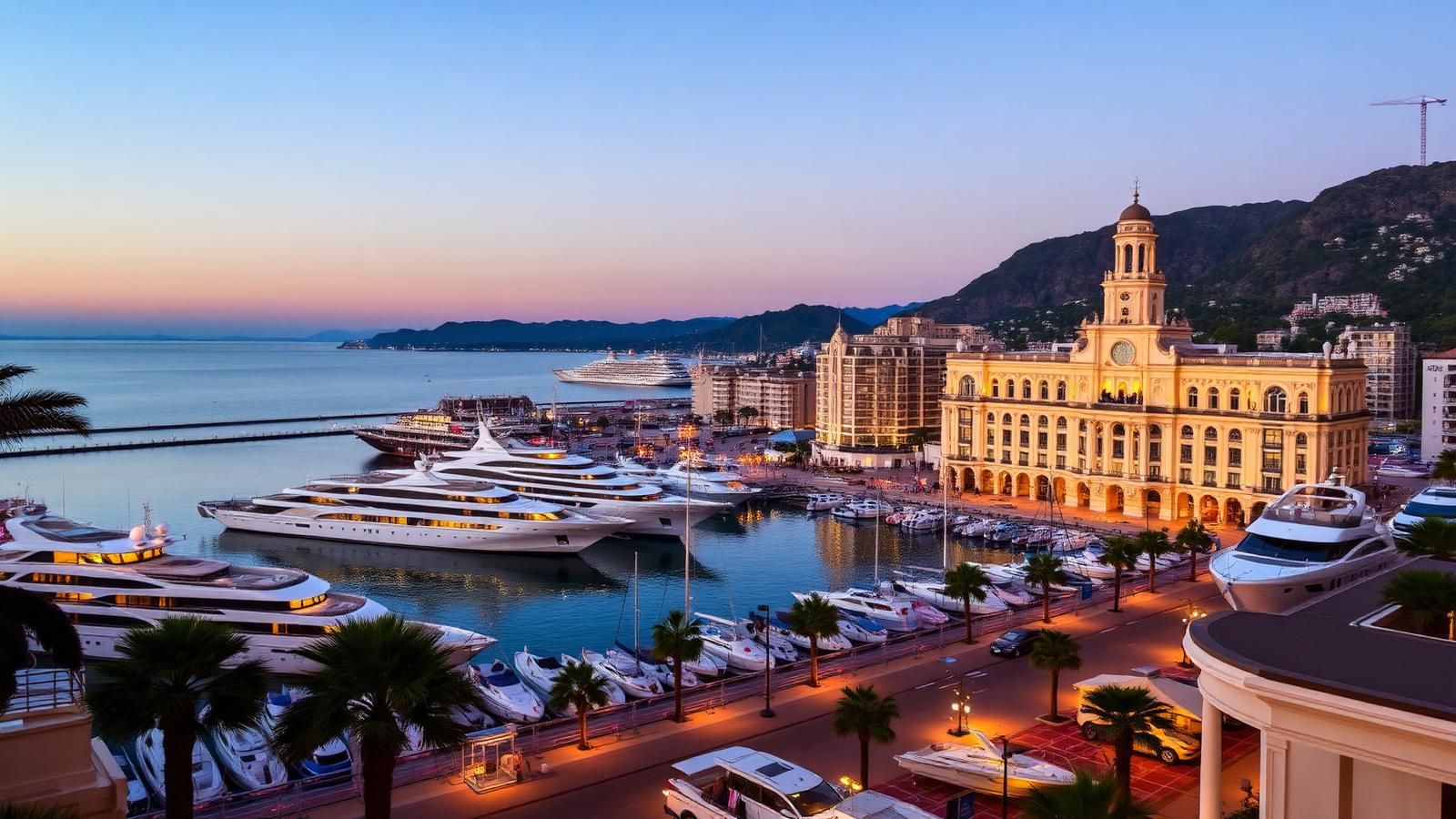
Monaco Residency for HNW Individuals: Cost, Process and Realities
Discover the costs, legal requirements, and lifestyle realities of securing Monaco residency for HNW individuals in our comprehensive 2024 guide.

Monaco Residency for HNW Individuals: Cost, Process and Realities
To obtain Monaco residency, a High Net Worth (HNW) individual must demonstrate proof of accommodation in the Principality, provide evidence of sufficient financial means, usually a minimum deposit of 500,000 EUR in a local bank, and pass a rigorous criminal background check. The process culminates in an official interview with the Sûreté Publique to confirm the applicant intends to reside in Monaco for at least six months of the year.
Key takeaways
- Financial Barrier: A minimum deposit of 500,000 EUR is generally required, though some banks may request higher amounts depending on the client profile.
- Housing Reality: Real estate is the world's most expensive per square metre; applicants must either own or rent a property suitable for their family size.
- Tax Efficiency: Residents benefit from zero personal income tax, zero capital gains tax, and zero wealth tax, provided they are not French nationals.
- Timeline: The process typically takes between three to six months from the initial bank account opening to the issuance of the Carte de Séjour.
- Physical Presence: Maintaining residency requires a commitment to spend at least 183 days per year in the Principality for most permit types.
What are the primary benefits of Monaco residency for HNW individuals?
Monaco has long been the primary destination for the global elite, not merely for its Mediterranean climate but for its unique fiscal and social ecosystem. For the HNW individual, the primary allure is a tax regime that is almost unparalleled in the developed world. Residents of Monaco do not pay personal income tax on worldwide income, nor do they face capital gains or wealth taxes. This fiscal environment allows for the efficient preservation and growth of multi-generational wealth.
Beyond taxes, Monaco offers a level of security that is rare in modern metropolises. With one police officer for every 100 residents and a comprehensive surveillance network, the Principality is frequently cited as one of the safest places on earth. For families, the educational system follows the French curriculum but incorporates intensive English language training, ensuring a high standard of private and state schooling.
What is the actual cost of Monaco residency?
While there is no "flat fee" paid to the government for residency, the economic costs are substantial. The financial requirements are divided into three main categories: banking, housing, and administrative fees.
The Bank Deposit
To satisfy the requirement of "sufficient means," an applicant must open a bank account in Monaco. Most Monégasque banks require a minimum deposit of 500,000 EUR to issue the necessary bank reference letter for the residency application. According to local experts at firms like Savills or Knight Frank, some private banks may require 1,000,000 EUR or more if the individual requires sophisticated wealth management services.
Real Estate Costs
This is the most significant hurdle. Applicants must provide a registered lease or a property deed. According to the Monaco Statistics Agency (IMSEE), the average price per square metre in the Principality exceeded 50,000 EUR in 2023. Renting a one-bedroom apartment often starts at 4,000 EUR to 6,000 EUR per month. The Sûreté Publique inspects the property to ensure the size is appropriate for the number of residents; for instance, a family of four cannot claim residency in a studio apartment.
Administrative and Legal Fees
The actual government application fee for the residency card is relatively low, usually under 100 EUR. However, legal fees for relocation consultants and lawyers typically range from 10,000 EUR to 25,000 EUR per family to handle the documentation, translations, and banking introductions.
What is the step-by-step process to apply?
The journey to becoming a Monégasque resident is methodical. It is often recommended to begin the process at least four months before the intended move date.
- Select a Property: You must have a lease agreement or property deed before applying. The lease must be for a minimum of one year and registered with the Monaco Tax Office (Services de l'Enregistrement).
- Open a Bank Account: You must undergo strict Know Your Customer (KYC) and Anti-Money Laundering (AML) checks. Once the funds are deposited, the bank issues a letter confirming you have sufficient means to live in Monaco without seeking employment.
- Gather Documentation: This includes birth certificates, marriage certificates, and a clean criminal record from your previous country (or countries) of residence for the past five years.
- The Official Interview: Once the file is submitted to the Residency Section (Sûreté Publique), you will be invited for an interview. This is a formal discussion regarding your background, family, and your intentions for living in the Principality.
- Issuance of the Carte de Séjour: If approved, you will receive your permit, initially valid for one year (the 'Temporaire').
Comparison of Residency Tiers
| Permit Type | Duration | Requirement | Renewal Period |
|---|---|---|---|
| Temporaire | 1 Year | First-time residents | Every 12 months for 3 years |
| Ordinaire | 3 Years | After 3 years of residency | Every 3 years |
| Privilégié | 10 Years | After 10 years of residency | Every 10 years |
| Conjoint de Monégasque | VARIES | Spouse of a citizen | N/A |
What are the realities of life in the Principality?
While the image of Monaco is one of yachts and casinos, the day-to-day reality for HNW individuals involves a compact, highly dense urban environment. Space is the ultimate luxury. Monaco is only 2.02 square kilometres, making it smaller than New York’s Central Park. This density means that even high-priced apartments may lack the gardens or privacy found in the French Riviera or Swiss Alps.
Furthermore, the "183-day rule" is strictly monitored. The authorities may check utility bills, credit card statements, or cross-border records to ensure that residents are truly living in the Principality. Failure to spend sufficient time in Monaco can lead to the non-renewal of the residency permit.
The French Exception: A Note for French Citizens
It is vital to note that French nationals moving to Monaco do not benefit from the same tax advantages. Under the 1962 convention between France and Monaco, French citizens residing in the Principality remain subject to French personal income tax as if they were still living in France. This makes Monaco a less attractive destination for French HNWIs compared to other jurisdictions.
Do you need a visa before applying for residency?
This depends purely on your nationality. Citizens of the European Economic Area (EEA) do not require a visa to enter Monaco and can begin the residency process directly. However, non-EEA nationals (including citizens of the UK, USA, and Canada) must first apply for a Long-Stay Visa (Type D) via the French Consulate in their current country of residence. Since Monaco is an enclave of France, the French authorities handle the initial entry permissions for non-EU citizens.
Conclusion
Monaco remains the gold standard for HNW individuals seeking a combination of safety, luxury, and fiscal efficiency. However, the barrier to entry is high, not only in terms of liquid capital but also in the ongoing cost of maintaining a residence in the world’s most expensive real estate market. Potential applicants should conduct thorough due diligence and consult with qualified legal and tax advisors to ensure their global tax position is optimised before making the move.
Disclaimer: This article is for informational purposes only and does not constitute legal, financial, or tax advice. Readers should consult with qualified professionals regarding their specific circumstances.
Frequently Asked Questions
Can I buy a property in Monaco to get residency? Yes, owning property is a valid way to satisfy the accommodation requirement. However, simply buying the property does not grant residency; you must still prove sufficient financial means and pass the security background checks.
How much money do I need to keep in the bank? While the standard is 500,000 EUR, this is a minimum. The bank must guarantee that you have enough to live comfortably. Most advisors suggest maintaining this balance as a minimum throughout your residency to ensure smooth permit renewals.
Is the 183-day rule mandatory? Yes, for the 'Temporaire' and 'Ordinaire' cards, you are expected to make Monaco your primary home. If the Sûreté Publique believes you are merely using the address for tax purposes without living there, they may decline your renewal.
Do children need residency permits? Children under the age of 16 do not require a separate residency card. However, they are issued a 'Document de Circulation' to facilitate travel and as proof of their right to reside and attend school in the Principality.
Can I work in Monaco with a residency permit? Residency does not automatically grant the right to work. To be employed by a Monégasque company, you must obtain a separate work permit. If you are self-employed or starting a business, you must apply for government authorisation to trade.
Official sources & references
Information in this article is drawn from the official government and intergovernmental bodies listed below. Always consult the primary source for current rules and fees.
- OECD — Tax Policy & Statistics
- OECD — Common Reporting Standard (CRS)
- HMRC — UK Statutory Residence Test
- IRS — US Taxation of Foreign Nationals
- EU — Directorate-General for Taxation (TAXUD)
- FATF — Financial Action Task Force
This page was last reviewed on . Where official figures have changed since publication, the primary source prevails.
See our full editorial disclaimer.